Easter Symbols and Their Meanings
Let’s explore the origins and meanings behind Easter’s most popular symbols.
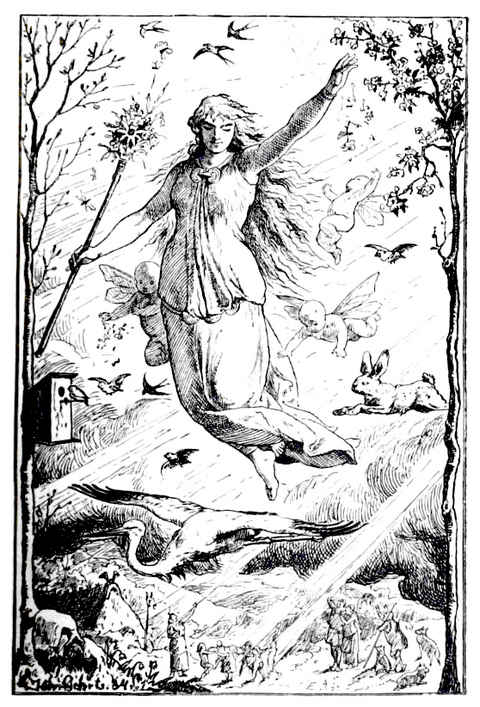
Like Christmas, Easter is a significant holiday for Christians, marking a time to reflect on the death and resurrection of Jesus Christ. Interestingly, the event also has connections to pagan customs and traditions. As discussed in this article, the name ‘Easter’ is linked to Eostre (also known as Ostara, Austro, and other names), the Germanic goddess of spring.
Pagan Customs and Traditions
In ancient times, Easter celebrations were based on lunar or solar cycles. Since these varied from year to year, the holiday was often celebrated on different dates. In most cases, though, the event usually coincided with the vernal equinox.
For pagans, the arrival of spring was a momentous occasion. While winter meant darkness, coldness and death, spring represented warmth, light and hope. This optimism led to all kinds of celebrations, including large-scale feasts and sacrifices to honour their gods and goddesses.
As you might have guessed, Easter’s traditions have undergone significant evolution over the centuries. Unfortunately, most of their original meaning has been forgotten altogether. In fact, most individuals are only familiar with modern-day (Christian) explanations of the holiday.
In this article, we’ll examine the history of Easter festivities. Specifically, we’ll examine the pagan and Christian symbolism that surrounds some of its most important icons. This includes flowers, lambs, the Easter Bunny, eggs and candles. Are you ready to learn more about this fascinating holiday? Great! Let’s get started!
The Symbolism of Easter Flowers
Flowers are considered one of the most important symbols of Easter. Since they grow (and bloom) throughout the spring, both pagans and early Christians often associated them with beauty, purity and life.
In the modern era, flowers continue to play a vital role in Easter celebrations due to their natural beauty, elegant scents and embodiment of springtime rituals. Some of the most symbolic varieties include lilies, irises, daisies and daffodils. Let’s take a closer look at the origins and symbolism of each:
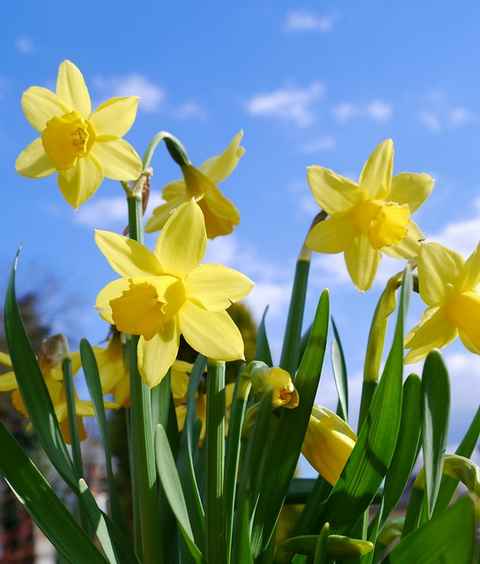
- Daffodils: Pagans and early Christians often associated these yellow or white flowers with resurrection and rebirth. Why? Since daffodils were one of the first flowers to bloom in the spring (marking the end of winter), many believed they were synonymous with ‘renewal’ and the triumph of light over darkness. For this reason, they were commonly associated with themes of hope and joy. A daffodil is one of the most ‘optimistic’ flowers, always bringing sunshine into one’s yard.
- Daisies: As with lilies, both pagans and Christians believed that daisies symbolized innocence and purity (due to their white petals). Because of their ability to survive in various conditions and environments, early Christians also associated the flower with renewal and rebirth, which is a central theme of the Easter holiday.
- Hyacinths: They represent calm, commitment, joy and peace. Their ancient Greek mythology is associated with love, mourning, and eternal life (Apollo denied Hades to take his friend Hyacinthus and transformed him into a flower with a characteristic pattern resembling the Greek expression of grief), similar to the Christian story of the crucifixion of Jesus. Each colour carries additional symbolism: white for purity, yellow for jealousy, pink for joy, red for passion, purple for sorrow, blue for sincerity, and black for death.
- Irises: For early Christians, irises symbolized the resurrection of Jesus Christ and ‘new life’. They also represented hope and faith. Pagan cultures viewed the flowers in a similar manner, as they believed they symbolized rebirth, renewal and fertility.
- Lilies: White lilies are commonly associated with innocence and virtue. For this reason, many early Christians linked them to the Virgin Mary’s purity, while pagans viewed them as a symbol of motherhood and gratitude.
- Tulips: They represent hope, joy, and perfect love. Being of so many colours, they can optimize virtually any colour scheme. Each colour of the tulips is associated with a specific characteristic: white for forgiveness, yellow for sunshune, orange for enthusiasm, pink for affection, red for passion, purple for faith, and blue for inner peace.
Of these flowers, it’s worth noting that white and yellow varieties were used primarily for Easter celebrations. Both Christians and pagans believed that white represented innocence, purity and a fresh start, while yellow symbolized joy, optimism and sunshine. When viewed in this light, it’s easy to see why spring flowers were utilized for springtime purposes, as they evoked thoughts of hope, happiness and new life. Yellow and white are essential components of Easter colour palettes.
Throughout history, lambs have played a central role in Easter celebrations. For Christians, the animal is often used to symbolize Christ.
The Lamb
The lamb is one of the oldest and most cherished symbols of Easter. This is due, in part, to the animal’s unique characteristics and traits. In pagan cultures, sheep were among the first domesticated animals, representing hope and renewal. They were also one of the first animals to give birth at the end of winter, which was interpreted as a sign of better times ahead. For this reason, it was common for pagans to sacrifice sheep during Easter, as they believed it would appease their gods, leading to a fruitful and peaceful year ahead.

What Does the Lamb Represent in Christianity?
Lambs were also symbolic for early Christians. Aside from being a traditional Easter meal, the animals represented hope, innocence, and rebirth. Similar to pagan cultures, many of these symbols were derived from ancient times, as Jews routinely sacrificed sheep in the Old Testament. This was done to appease God and atone for sin. The practice was eventually carried over to Christian times and was referenced during the crucifixion of Jesus Christ.
Because of the lamb’s symbolic nature, Jesus was often referred to as a ‘Lamb of God’, as his death (and resurrection) was designed to atone for all of mankind’s sins. Because of this, his sacrifice was similar to a lamb’s fate, as it provided believers with a means to achieve salvation through the forgiveness of their sins.
For this reason, sheep hold a special meaning to Christians at Easter, as they symbolize the death and resurrection of their Saviour. His crucifixion can also be seen as a personalized representation of Christians and the ‘rebirth’ they undergo by trusting God. Lambs are frequently featured in vintage Easter greeting postcards.
In ancient times, the hare was a primary symbol of the goddess, Ostara.
The Easter Bunny
The Easter Bunny is one of the most popular Easter symbols and is a favourite of children. So, where did this icon originate? In ancient times, rabbits (not bunnies, which are a modern term) were the primary symbol of Ostara, the goddess of spring. Although the relationship between the two is unclear, many scholars believe it was based on the hare’s remarkable fertility, which was a common theme of the Easter season.
History and Origins
For pagan cultures, seeing a hare near human habitations was a good sign, as it indicated that the long, dark winter was almost over and that warmer weather and new food would soon arrive. Hares were also valued for their breeding habits, which mirrored the Earth’s fertility during springtime.

Since they built nests similar to birds, many pagans believed hares were once birds. According to legend, Ostara discovered one of these ‘birds’ with frozen wings and saved the animal by transforming it into a hare. The hare was so grateful that it began laying eggs once a year (to honour her during the Ostara festival). In most cases, these eggs were coloured, with each hue representing a different aspect of springtime.
Modern Views
In the modern era, the story of hares and their connection to the Easter Bunny has undergone numerous revisions. For many, he is now viewed as a primary symbol for Easter and is reminiscent of Santa Claus at Christmas. Instead of bringing toys, though, it is said that the Easter bunny brings baskets of eggs, candies and chocolates for children who behave throughout the year.
Although the character was never officially ‘adopted’ by Christians (due to its secular nature), some religious groups have made parallels between the Easter Bunny’s ‘gift bringing’ and the new life offered by Christ’s resurrection. For most individuals, though, the character symbolizes the joy and merriment of the season, nothing more.
Eggs
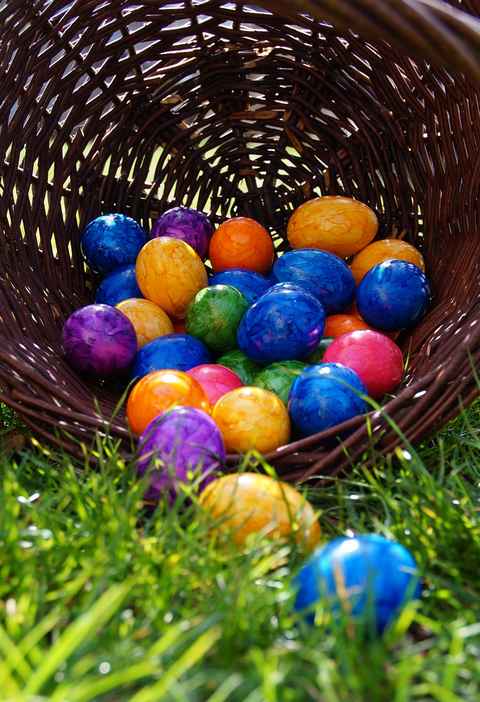
In pagan cultures, Easter eggs were often given as gifts to celebrate the arrival of spring.
For centuries, eggs have played a central role in Easter celebrations for both pagans and Christians alike. In pagan times, they were often given as a present at the beginning of spring (to celebrate the beginning of a ‘new year’).
Because of their nutritious value and long ‘shelf-life’, it was possible to collect eggs and put them back for the spring. To make them even more appealing for their future recipients, it was common for individuals to colour them with natural dyes. One method involved the use of an onion peel.
How to Colour Eggs With Onion Peels
Put clean (raw) eggs in a pot. Add cold water, one spoonful of vinegar and onion peels. Boil it for 10 minutes. Turn off the heat and allow them to cool for a few minutes. Voila! The eggs should now be crimson red in colour.
What Do Easter Eggs Represent?
According to pagan customs and beliefs, eggs, with their oval shape, represented the infinite cycle of nature. These cycles were often synchronized with the Sun’s apparent motion, which served as the source of all energy (and was a crucial element of life).
Pagan traditions also valued eggs for their ability to symbolize life, a central theme of the Easter season. The seemingly lifeless object, resembling a rock from which a live bird was hatched, undoubtedly fascinated ancient folk. As a result, many believed that the eggs possessed mystical powers.
Christian Symbolism
Despite its connection to pagan rituals and customs, Easter egg practises were eventually absorbed by churches in the Middle Ages. Since then, many Christians have regarded the eggs as a representation of Christ’s tomb, where he was resurrected.
Some even viewed the eggs as symbols of the Holy Trinity, as the shell, yolk and albumen were considered three parts of one egg (similar to the three distinct personalities of God). For this reason, it was common for early Christians to colour them red, as it symbolized Christ’s blood, which was spilled on the cross.
Still, to be honest, the Christian symbolism was explained many centuries after the pagan symbolism was already established, and this happened way before Jesus was born.
Today, with the huge development of the colour industry, numerous colours are used for colouring the eggs, which are also popular elements in Easter countdown calendars.
Chicken
Chicken is a traditional symbol of Easter for the very same reason. In different cultures, it represents fertility, loyalty, prosperity, and good fortune. It’s a symbol of life, fresh starts, and new beginnings. As maybe the most common domesticated animals, chickens were closely associated with all important aspects of human life. Ancient Romans observed the behaviour of chickens to predict battle outcomes. Ancient Egyptians portrayed the goddess Isis with a chicken’s head. The Indian goddess Kali is often presented holding a chicken, representing her power over life and death. Native Americans believed that a rooster crowing at night predicted death, and so on.
In Christianity, a rooster’s call is associated with St. Peter, who denied Jesus thrice before the rooster crowed. This symbolism may be linked to another one: numerous primitive cultures connect the rooster’s crow to the rising Sun, and Jesus is a representation of the Sun.
Candles
For centuries, Paschal candles have been utilized heavily by churches. They are commonly lit during important events, including baptisms, funerals and Easter services.
Finally, candles are another important symbol of Easter and have been around for centuries. Although they were sometimes utilized by pagans for rituals and religious purposes, the use of these icons for Easter celebrations was limited (primarily) to Christianity.
For centuries, churches have lit Paschal candles during important events. This includes baptisms, funerals and Easter-based events, such as Palm Sunday, Good Friday and Holy Saturday. For Christians, Palm Sunday commemorates the entry of Jesus into Jerusalem, while Good Friday is a day to reflect on his crucifixion. In contrast, Holy Saturday is reserved for the celebration of Easter Vigil.
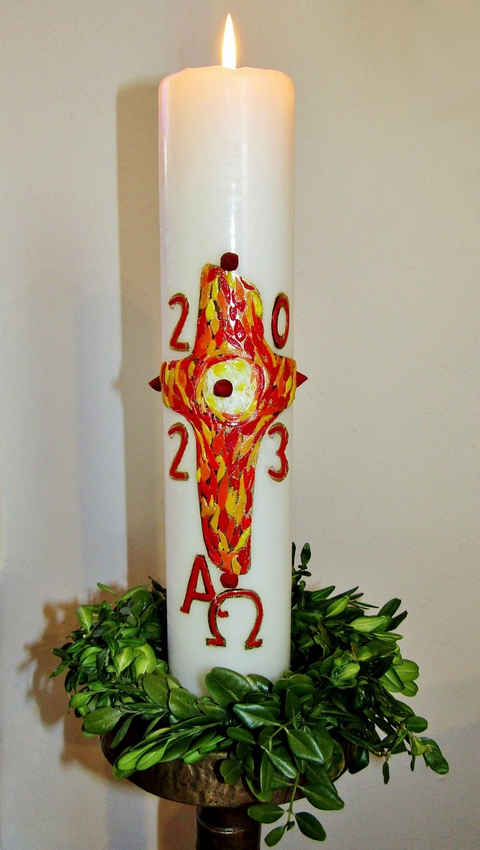
In accordance with tradition, Paschal candles are often decorated with symbols that have powerful meanings. Here are some of the most common ones used in its design:
- Cross: The cross is the main symbol of the Paschal candle and represents Christianity as a whole.
- Dates: Numbers of the current year represent the presence of God in the present.
- Flame: Finally, the candle’s fire represents the resurrection of Jesus and his eternal presence. It also serves as a reminder to Christians that Jesus is the ‘Light of the World’.
- Greek Letters: The Greek letters Alpha and Omega are sometimes added to Paschal candles as well. They are commonly inscribed at the top or bottom portions and serve as a reminder to Christians that Jesus is the beginning and the end (i.e., the eternity of God).
- Nails and Studs: Five grains of incense (in the form of a cross) represent the five wounds suffered by Jesus.
- The Light of Christ: The light of the candle symbolizes the triumph of life over death, day over night and hope over despair.
Wreaths
Wreaths are important Easter symbols. Their round shape represents eternity, new beginnings, and endlessness. These characteristics with pagan observations of life cycles and Christian teachings of Jesus’ resurrection, immortality, and, let’s not forget, his crown of thorns. The thorns represent the pain he went through before the possibility of everlasting life, not only for himself but for all Christians.
The olive wreath is a classic symbol, with olive leaves representing hope, peace, and a fresh start. Other evergreens may be used instead. Easter wreaths can be hung on walls or doors, but can also enhance the festive atmosphere as centrepieces on the tables.
Final Thoughts
In closing, Easter is a symbolic holiday that celebrates new life, nature and its various cycles. As we have seen in this guide, this celebration is not limited to religion, either. It’s also echoed in numerous areas of society, including mythology and fairy tales.
Although the original meaning of Easter symbols has been forgotten (by many), its theme of renewal and rebirth remains central to modern observations. We hope this article has been helpful and informative. Share it with your friends!